

Cleaning Circuit Cards After Assembly
When assembling circuit cards, the quality of cleaning and quality control of the finished product is crucial. Failure to clean effectively and thoroughly can result in faulty electronics, costly warranty replacements, and other problems for consumers. To prevent this, a number of techniques are employed for cleaning circuit cards after assembly.
A well-known technique is to use a brush and lint-free towels to wipe away any dirt or debris on the surface of the printed circuit board (PCB). This step helps prevent the contamination from reattaching to the cleaned surface, and it can also be used to remove any dust that has accumulated on the PCB.
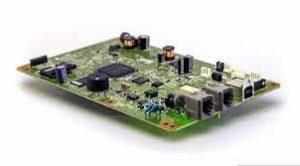
Another method is to use compressed air to clean the PCBs. This method is effective for removing stubborn, sticky grime that is not removed by other methods. It also offers a discreet way to dislodge contaminant particles that have become trapped inside intricate via holes. It is important to note that this method must be used in a well-ventilated area since it can cause breathing issues for the operator.
Techniques for Cleaning Circuit Cards After Assembly
Soldering is a necessary part of a circuit card assembly, and it produces some residue that can be difficult to get rid of. In addition, soldering can damage the metal contacts of components and lead to a faulty circuit board. To avoid these problems, the PCB must be cleaned thoroughly after every soldering process.
After a thorough cleaning, it is important to test the circuit board for any defects. A specialized microscope is an excellent tool for this purpose. If any damage is found, it is critical to repair these faults as soon as possible. Otherwise, it may be impossible to use the device correctly.
Several different PCB cleaning solutions can be utilized, including solvent-based cleaners and water rinses. The choice of cleaner depends on the type of contaminants that need to be eliminated. In most cases, a solvent-based cleaner is recommended because it is able to dissolve most contaminants that are not water-soluble, such as cured flux residues.
Isopropyl alcohol is a common PCB cleaning solution. It is important to use pure isopropyl alcohol, as this will help ensure that no harmful chemicals are absorbed into the PCBs. In addition, it is important to remember that isopropyl alcohol can be toxic if inhaled, so it should be used in a well-ventilated environment.
It is also possible to use ultrasonic PCB cleaner. This is a popular option among FS Tech customers, as it helps to remove contaminants quickly and effectively. It is essential to choose a solution that is safe for all types of circuit boards.
One of the most challenging contaminants to eliminate from a circuit board is battery acid. This can leak under the protective solder mask coating and travel along the traces, even to areas that are not visibly damaged. It is therefore advisable to neutralize the acid on the PCB using a mixture of baking soda and water, forming a thin paste.
