Components Solded onto a PCB Assembly Board
PCB assembly is a key process in the production of electronic devices. This is because a circuit board contains the circuitry that connects and supports all the components of a device. Whether you are making a mobile phone, slot machine or spacecraft, the printed circuit board is what holds all the other elements together. It is therefore important that the pcb assembly board is correctly made.
During the PCB assembly process, there are several steps that must be taken into account to ensure the quality of the product. These steps include component verification, assembly and inspection. Careful inspection can identify any defects or irregularities that may compromise the performance of the final device. A stencil printer applies solder paste to the PCB pads where components will be placed. This paste contains a mixture of solder and flux. High-speed pick-and-place machines accurately position components onto the solder-pasted pads.
Before a pcb assembly board is assembled, it is necessary to verify the correct components have been ordered and are in stock. This includes a thorough inventory check of resistors, capacitors, diodes, transistors and integrated circuits to confirm that they are available. It is also important to ensure that the appropriate design files have been generated for fabrication and assembly. These include Gerber/ODB++, bill of materials and Centroid (X and Y placement) files.
Getting the right amount of solder paste on a bare PCB is a critical step in ensuring accurate component placement and successful soldering. A stencil and applicator are used to precisely apply the paste, which is made up of microscopic metal balls and a substance called flux. Once the stencil is in place, a mechanical fixture holds the stencil and the PCB while the solder is applied. The correct amount of solder is crucial, as too much will result in a blotchy appearance and a poor connection, while too little will not adhere properly.
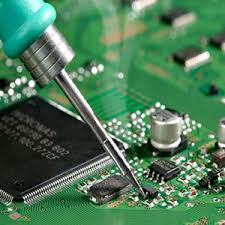
How Are Components Solded onto a PCB Assembly Board?
Unlike the through-hole components, SMD parts are small and flat. This makes them easier to install. However, SMD components must be soldered to the circuit board using a different method from through-hole components. Through-hole components are those that have a lead and are inserted into holes on the circuit board. These holes are plated through the entire circuit board, and they are typically used to pass signals from one side of the board to another.
While advanced electronics do not primarily use through-hole components, many components are still manufactured as through-hole items. These through-hole components are inserted by connecting the leads of the component to the circuit board through the plated hole. Through-hole components require a different soldering technique than SMD components, and are most often assembled using wave or reflow soldering methods.
To solder through-hole components, you need a hot, well-tinned soldering iron with a fine tip. A tinned tip allows the solder to flow smoothly and reduces the probability of damaging the component or the circuit board with excessive heat. Before the iron is used, the soldering area must be preheated to a high temperature to allow the solder paste to melt and bond with the component.
;)