Used in Pcb Assembly and Manufacturing
Printed circuit boards, or PCBs, contain conductor tracks, laminates and via holes that connect components on one or both sides of the board. The primary methods used in Pcb assembly and manufacturing are surface mount technology (SMT) and through-hole technology (THT). Both types of assembly can be automated or manual, though manual processes are less common these days because of advancements in robotics. It is essential that a quality PCB assembly process is chosen to ensure a finished product that functions correctly. A single error can cause field failure and safety hazards.
To start the process of assembling a circuit board, the company that will perform the assembly will need the design file for the board, along with any notes and specific requirements. This file is then run through a design for manufacturability (DFM) check to see if there are any problems that will affect the functionality of the board. If there are, the company will correct them before the fabrication stage of the process begins.
After the DFM check, the boards are fabricated. This involves cutting the core of the board from a metal like copper, and then depositing it on both sides to form a base for the rest of the assembly. The core can be either rigid or flexible, depending on the needs of the final product. Rigid cores tend to be more stable and have better temperature resistance, while flexible boards offer a greater range of motion.
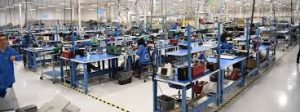
Primary Methods Used in Pcb Assembly and Manufacturing
The next step is the application of solder paste, which is a greyish substance that contains tiny balls of silver and tin, with a combination of flux that helps it to bond to surfaces. The paste is applied using a stencil with apertures that match the pads on the PCB. A precise amount of paste must be applied to each area of the board to avoid creating poor connections, which can lead to short circuits and other failures. A mechanical fixture holds the stencil and PCB in place, and an applicator spreads the paste across the intended areas of the board.
Once the paste is in place, the components are placed on the PCB. For high-volume production, this can be done by an automated pick-and-place machine. This can accurately place a large number of small, surface-mount components, such as resistors and diodes. More complex parts require hand placement, which takes a high degree of skill.
Printed Circuit Board (PCB) assembly and manufacturing are critical processes in the electronics industry, involving the creation of complex circuits by mounting electronic components on a substrate. However, this intricate process is fraught with various challenges that can impact quality, efficiency, and cost-effectiveness. Here, we explore some common challenges faced during pcb assembly and manufacturing.
Once all the components are in place, the PCB is passed to a reflow oven for soldering. The heat will melt the solder and bond it to the pad. Then, the parts are inspected to make sure that they are in the proper position and orientation, with attention given to component polarity where applicable. A final test is performed to verify that the board works to its full electronic capacity.
;)